
Before you book a hotel for a family trip, imagine an ordinary evening in the room. Someone may need an early bedtime, another person may be unpacking, and everyone needs somewhere to put bags. A room can look spacious in a photograph while providing an awkward fit for the way your family travels.
The useful question is not simply whether a hotel welcomes children. It is whether the exact room category and facilities support your stay. Walk through the holiday from arrival to departure and use each stage to identify what you need to confirm.
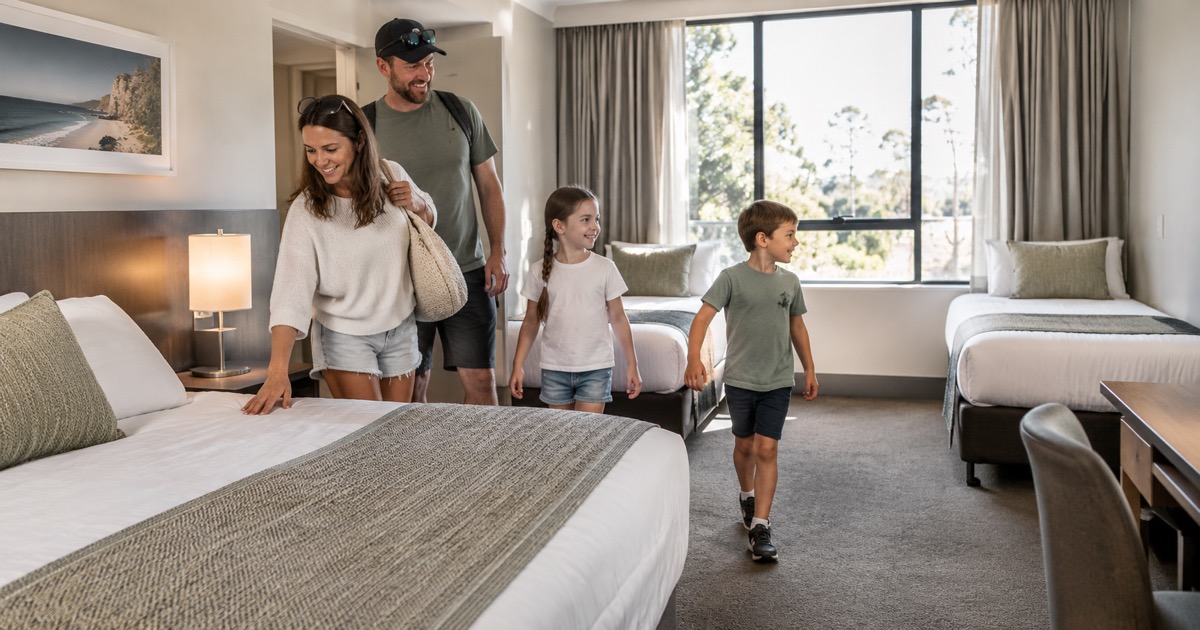
Walk through the stay before booking
- Arrival and luggage
- Beds and bedtime
- Breakfast and everyday facilities
- Moving between the hotel and activities
- Checkout and departure
- Family room questions
Arrival: can the family settle in comfortably?
Compare your likely arrival time with the property’s check-in arrangements. If you will arrive before room access, ask about luggage storage and where you can wait comfortably. If arrival is late, confirm how you obtain the key and whether any preparation is required.
Think about the journey from the entrance to the room. Families with a pushchair, large bags or specific access requirements may need information about lifts, steps or parking proximity. Ask about the particular feature you need instead of relying on a broad accessibility label.
Check where luggage will go once you are inside. An extra bed can use the floor space shown in the main room photograph. Request information about the layout with every required bed in place, not simply the room in its standard configuration.
Keep the first evening simple. A nearby meal option or the ability to prepare a basic snack can make arrival easier after a long travel day. Confirm the practical arrangements before depending on them.
Bedtime: confirm the actual sleeping arrangement
Start with the number and type of beds in the room category you intend to book. A family room, suite and apartment may mean different things at different properties. Read the specific description and confirm the permitted occupancy for your travellers.
Distinguish between an existing bed and a requested extra bed or cot. Ask whether the requested item is available, whether it needs advance confirmation and whether a charge applies. If the arrangement is essential, obtain a clear answer before completing the booking.
Consider sleeping routines as well as capacity. A separate bedroom or usable sitting area may suit a family whose children sleep earlier than the adults. For another family, a single open room might be entirely practical. Choose according to your habits rather than assuming the largest room is always necessary.
If you need connecting or adjacent rooms, ask how the property handles that request and what is actually confirmed. Two rooms on the same booking do not, by themselves, explain their position within the building.
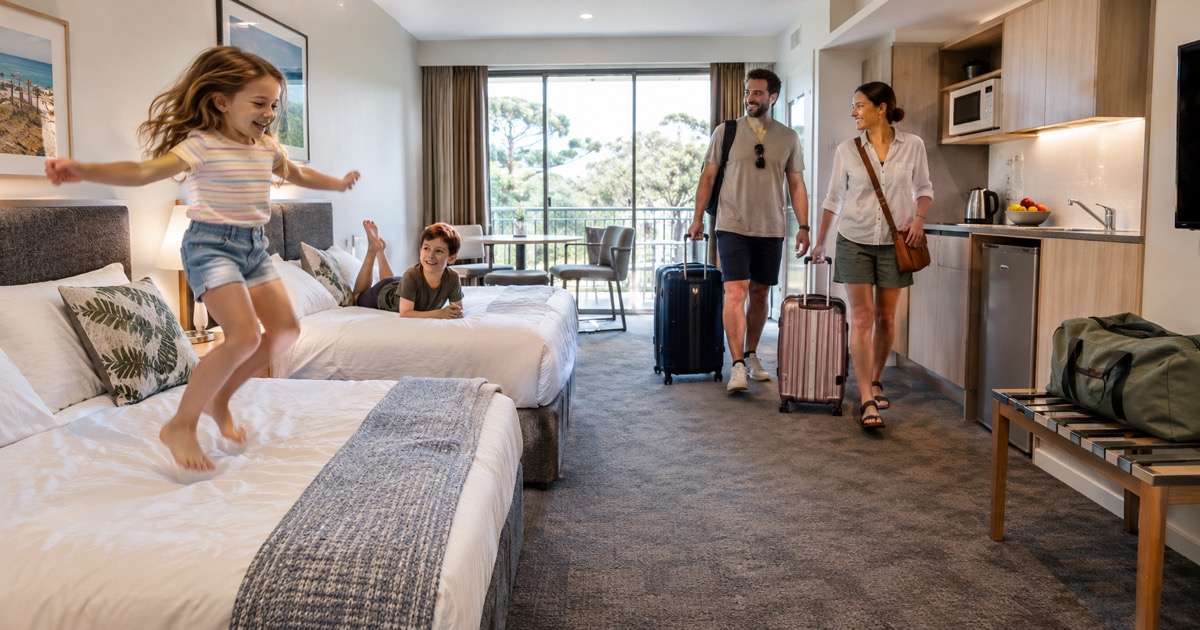
Read the room photograph as a question, not a guarantee
Identify which category the photograph represents. Properties often show several layouts in one gallery, and the most attractive image may belong to a different booking option. Compare the room name, facilities and price together.
Look for everyday space: a place to open a suitcase, a safe route around the beds and somewhere to sit if the weather keeps you indoors. Do not infer measurements or accessibility from a wide-angle photograph alone.
If a feature affects your decision, ask directly. A clear answer about the actual room can be more useful than many general images of the property. Save that confirmation with the booking details.
Morning: check how meals and routines will work
Breakfast arrangements deserve more attention than a simple inclusion icon. Confirm which travellers are included, where the meal is served and the relevant hours. A family planning an early start may not be able to use a breakfast service that begins later.
For a self-catering room, check the equipment you actually need. A fridge and kettle support a different routine from a kitchenette with cooking facilities. Ask about basic utensils and food storage if you intend to prepare meals.
Think about bathroom access and preparation time. A room that comfortably sleeps everyone may still create a slow morning if your plans require the whole family to be ready at once. Allow a realistic rhythm rather than scheduling every activity immediately after breakfast.
For a longer stay, laundry arrangements can affect packing. Confirm whether facilities are in the room, shared or provided as a separate service. Include any relevant cost and availability in your comparison.

The day out: choose a base that fits the itinerary
Place the hotel on the same map as your intended activities and transport connections. A lower room rate can be less useful if it adds repeated journeys, parking charges or complicated transfers. Compare the whole day rather than the address alone.
Check whether you can return easily for a rest. Families with younger children may value a convenient base more than an extra hotel facility they will rarely use. Older travellers may prefer access to the activities that matter most to them.
Ask specific questions about facilities your family intends to use. Operating times, age conditions and supervision requirements can change the practical value of a pool, play area or other amenity. Confirm current arrangements with the property.
If you are comparing a hotel stay with a wider offer, see our family travel-deal comparison guide. It explains how room suitability connects with transport and activity inclusions.
Checkout: plan the gap before travelling home
Compare checkout with your departure time. If several hours remain, ask about luggage storage and choose a manageable activity or meal nearby. Do not assume continued room access without confirmation.
Allow time to pack and check the room, especially when children’s belongings are spread across several areas. Keep travel documents and essential items accessible rather than placing everything in a bag that will be difficult to reopen.
Review the return transfer as carefully as the arrival. Confirm the pickup point, required timing and any arrangement for luggage or equipment. A simple departure plan can protect the relaxed feeling of the final day.
Before you confirm the room
- Check the exact room category and occupancy.
- Confirm every essential bed or cot arrangement.
- Ask about access features that affect your family.
- Include meals, parking and required extras in the total.
- Read change and cancellation conditions.
- Save the arrival instructions and contact details.
Keep unanswered questions separate from confirmed details. This prevents a helpful possibility mentioned during a conversation from becoming an assumption that the property has guaranteed it.

Book the room your family can use well
To book a hotel successfully, compare the stay as a sequence of ordinary moments, not just a room rate. Explore Alby Travel for accommodation options and read our hotel confirmation checklist before making the final decision. Confirm essential family arrangements directly.
Frequently asked questions
Does a family room always have separate beds?
No. Check the bed configuration for the exact room category and ask about any arrangement that matters to your family.
Is an apartment always better than a hotel room?
Not necessarily. Compare location, facilities, space and the way your family plans to use the accommodation.
Should we request a cot after booking?
If it is essential, check availability and confirmation arrangements before committing. Read any associated conditions.
What if the room description is unclear?
Ask the property a specific question about the room category you intend to purchase and keep the answer with the booking.